
'Tensions and dialogue are likely to go hand-in-hand with China.' 'The goal should be to cultivate power so that one can negotiate from a position of strength.'

The govt said that the issue is sensitive and related to national security and thus can't be made public.

Members of the Congress also walked out of the Lok Sabha and staged a sit-in in the Parliament House complex after they were not allowed to speak following a statement by Defence Minister Rajnath Singh on the border standoff with China in eastern Ladakh.

China's Defence Ministry says the militaries of China and India are making "great progress" in implementing the disengagement agreement to end over four-year-long standoff in eastern Ladakh. Spokesman Sr Col Wu Qian said Defence Minister Rajnath Singh and his Chinese counterpart Admiral Dong Jun had a positive meeting in Vientiane, Laos, last week, and the two sides are implementing the settlement reached between the two counties. The two ministers agreed to implement the important consensus reached between the top leaders and promote stable relations between the two countries, the spokesman said.

Indian graziers were stopped by Chinese troops from moving ahead near the Line of Actual Control (LAC) in the Demchok region of eastern Ladakh over a week ago, people familiar with the development said on Monday.

China's ruling Communist Party is holding its annual leadership conclave to discuss the new five-year plan, the impact of US President Donald Trump's tariff war, and the ongoing anti-corruption crackdown in the military.
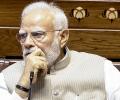
China welcomes Prime Minister Narendra Modi's planned visit to the Tianjin Summit of the Shanghai Cooperation Organisation (SCO), expressing hope that the event will be a 'gathering of solidarity, friendship and fruitful results'.

'If Washington has to balance Chinese power, she will have to turn to the third biggest power in the world which is India.' 'The United States and India will have to work together in order to keep Chinese ambitions in check.'
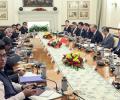
Chinese Foreign Minister Wang Yi's visit to India focuses on border talks with NSA Ajit Doval, amidst efforts to rebuild relations after the Galwan Valley clashes and rising India-US tensions.

India and China held a special round of military talks on Tuesday at the Chushul-Moldo border meeting point in Eastern Ladakh to discuss air space violations and provocations by the Chinese side in that area in the last 45 days.
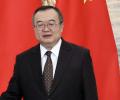
The 61-year-old senior diplomat was taken away for questioning in late July after returning to Beijing from an overseas work trip, the paper reported, quoting people familiar with the matter.

'However, a lot of preparatory work would have to go in and China must be prepared to announce an end to the standoff by disengaging from the remaining areas along the LAC.'
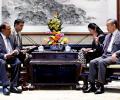
Chinese Foreign Minister Wang Yi will visit India for border talks with NSA Ajit Doval, ahead of PM Modi's visit to China for the SCO summit. The visit aims to improve bilateral ties after recent tensions.
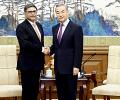
The Chinese Defence Ministry has stated that the Indian and Chinese militaries are implementing the resolutions to end the standoff in eastern Ladakh in a "compressive and effective manner." This follows the disengagement process completed late last year after a pact for troop withdrawal from Depsang and Demchok, the last two friction points in eastern Ladakh. The disengagement has paved the way for the resumption of various dialogue mechanisms between the two countries, with the aim of normalizing bilateral relations.
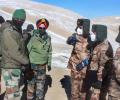
Sources said the Indian troops resolutely confronted the Chinese PLA soldiers.
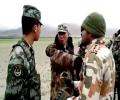
India has significantly enhanced military infrastructure, surveillance and combat capabilities along the nearly 3,500 km-long Line of Actual Control (LAC) with China since the deadly clashes in Galwan valley in 2020, sources in the defence establishment said Wednesday on the eve of the third anniversary of the hostilities.
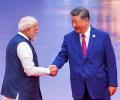
Prime Minister Narendra Modi and Chinese President Xi Jinping held talks focusing on rebuilding bilateral relations, emphasizing border peace and addressing cross-border terrorism.
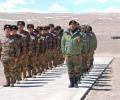
Chinese foreign ministry spokesperson Mao Ning told the media in Beijing on Monday that the two sides held an in-depth exchange of views on expediting the resolution of relevant issues.
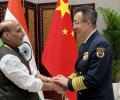
China has called Tibet-related issues a 'thorn' in India-China bilateral relations and a 'burden' for New Delhi, ahead of External Affairs Minister S Jaishankar's visit to China.

Chinese Foreign Minister Wang Yi said that it is imperative for the two sides to view each other as partners and opportunities rather than rivals or threats, and invest their valuable resources in development and revitalisation.

This is not for the first time that the Dalai Lama is visiting a border region as he had visited Ladakh as well Arunachal Pradesh several times in the past, the functionary said.

India and China on Monday held a fresh round of military talks with a focus on disengagement of troops in the remaining friction points in eastern Ladakh and ease overall tensions in the region.

Wang is travelling to India days ahead of Prime Minister Narendra Modi's planned trip to the Chinese city of Tianjin to attend the annual summit of the Shanghai Cooperation Organisation.

External Affairs Minister S Jaishankar and his Chinese counterpart Wang Yi met in Moscow on Thursday amid hopes of a possible breakthrough in reducing tensions along the Line of Actual Control (LAC) in eastern Ladakh.

Rezang La is the site of an epic battle where Indian troops bravely fought the Chinese soldiers in 1962.
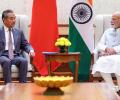
China's Foreign Minister Wang Yi expressed China's anticipation for Prime Minister Narendra Modi's visit to the Shanghai Cooperation Organisation (SCO) summit, emphasizing the importance of strong India-China relations and mutual cooperation.

"The two former defence ministers had some clarifications and doubts on the situation which were clarified by the CDS and the Army chief," sources said.
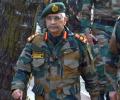
Chief of Army Staff Gen MM Naravane on Friday visited several forward areas in eastern Ladakh and carried out a comprehensive review of India's operational preparedness in the backdrop of its prolonged military standoff with China in the mountainous region.

At a press conference ahead of Air Force Day on October 8, he also said that India needs to catch up with China on technology and speed in production of military equipment, holding that "we are way behind" the neighbour. Air Chief Marshal Singh, at the same time, said the Indian military is way ahead in terms of personnel including those operating various machines and platforms. "I am very confident that as far as human angle is concerned, as far as our people behind the machine are concerned, we are way ahead of them," he said.
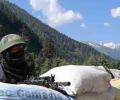
The Army Chief was in Ladakh on a two-day visit from June 23 to take stock of the situation.
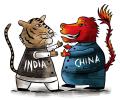
India and China have announced a series of measures aimed at improving their relationship, including maintaining peace along the border, reopening border trade, and resuming direct flights.

The Army said Gen Pande witnessed Parvat Prahar exercise besides interacting with officers and troops deployed in the region. The exercise featured a display of operational capabilities by artillery guns and other key weapon systems.
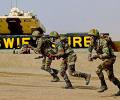
The Indian Army's broader reorganisation is inevitable as India's military doctrine adapts to the demands of the modern battlefield.

The visit is also aimed at boosting morale of the army personnel engaged in the seven-week bitter border faceoff with the Chinese troops in the region, sources added.

The situation along the Line of Actual Control (LAC)in eastern Ladakh remained 'very fragile' and is 'quite dangerous' in military assessment because of close deployments of troops of both sides in some pockets though substantial progress has been made in the disengagement process in many areas, External Affairs Minister S Jaishankar said on Saturday.
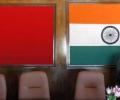
India and China have agreed to take measures to further ease the situation at the borders while continuing to implement the October agreement to resolve the standoff in eastern Ladakh comprehensively. The two sides held the 32nd meeting of the Working Mechanism for Consultation & Coordination on China-India Border Affairs (WMCC) in New Delhi, agreeing to maintain communication through diplomatic and military channels and safeguard sustainable peace and stability in the border areas. This meeting follows the October 21 agreement between the two countries to resolve the over four-year-long military standoff in eastern Ladakh.

India and China held talks in New Delhi to discuss the lessons learned from the eastern Ladakh military standoff and prevent its recurrence. The two sides also prepared for the next meeting of the Special Representatives on the boundary question. The talks took place under the framework of the Working Mechanism for Consultation and Coordination on India-China Border Affairs (WMCC). Both sides highlighted the importance of regular exchanges and contacts at diplomatic and military level to maintain peace and tranquility in the border areas.

The transgression took place on August 30, and the Chinese troops returned from the area after spending few hours, they said.
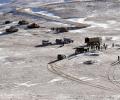
The development comes after after reaching a consensus in the 16th round of military talks, the two sides said in a joint statement this evening.

Singh also assured the opposition that the central government will not keep Parliament or anyone in the dark about developments on the border and will share details at an appropriate time.
